
Spring lawn care tips for a dry spell

Spring lawn care tips for a dry spell

A dry spell can make things tricky, but with a little know-how, you can still keep your lawn healthy and looking its best.

Spring lawn care tips for a dry spell

A dry spell can make things tricky, but with a little know-how, you can still keep your lawn healthy and looking its best.

Spring is the season when your lawn starts to shake off the dullness of winter and show signs of life. But what happens when spring arrives without the rain? A dry spell can make things tricky, but with a little know-how, you can still keep your lawn healthy and looking its best.

Mowing: less is more

When your lawn is dry, it’s tempting to stick to your usual mowing schedule. But if there’s been little to no rainfall, it’s best to ease off. Grass grows more slowly in dry conditions, so you won’t need to mow as often. Aim to cut no more than once every 10 to 14 days, depending on growth.

Crucially, don’t cut your grass too short. A longer lawn is more resilient in dry weather, helping to shade the soil and reduce evaporation. Set your mower blades higher than usual. Around 5cm (2 inches) is ideal. This gives your lawn a better chance to stay green and healthy without extra water.

Watering: should you or shouldn’t you?

For new lawns or recently laid turf, regular watering is essential until roots are fully established.

However, if your lawn is established, it can usually tolerate a short dry spell without any long-term damage. Grass goes dormant in dry conditions, turning brown to conserve energy, but this doesn’t mean it’s dead. As soon as the rain returns, it will bounce back.

It does look like rain is on the way, but should the dry weather continue for several weeks, it may be a good idea to water once a week in the early morning. This will help to encourage deep root growth. Shallow, daily watering might have an adverse effect as it may result in weak roots that are more vulnerable to drought.

Feeding: hold off on the fertiliser (for now)

Spring is typically a good time to feed your lawn, but during a dry spell, it may be better to wait. Applying fertiliser when the soil is dry can do more harm than good, and it can even scorch the grass. Fertilisers need moisture to break down and be absorbed properly, so delay feeding until after a decent rainfall.

When the time is right, choose a spring-specific lawn feed with balanced nutrients to support healthy growth. We all have our preferences, but organic options are a gentler alternative to some traditional feeds.

Weeding: tackle them while they’re small

Dry weather doesn’t stop weeds sprouting up! They will also compete with the grass for limited resources, especially nutrients and any moisture that’s available. If there aren’t too many weeds you can pull them out by hand or using a special tool. Keeping them under control now will avoid the need to use weedkiller later.

And finally!

Spring lawn care in a dry spell is all about balance. A light touch with the mower, a pause on fertiliser, timely weed control. Keep an eye on the forecast, be prepared to water if needed, and your lawn will thank you with verdant growth as soon as the rain returns.

If your lawn does suffer and you need to returf just get in contact. We will supply larger orders ourselves or recommend a local supplier of our turf.

Contact us

01392 231040
sales@wesellturf.com

Office address

HCT Turf
The Old Stable
Clyst Road
Topsham
EX3 0DB

Social media

Turf for Starcross Primary School

Turf for Starcross Primary

HCT was delighted to donate some turf to Year Two at Starcross Primary School

Turf for Starcross Primary 

HCT was delighted to donate some turf to Year Two at Starcross Primary School

HCT was delighted to donate some turf to Year Two at Starcross Primary School. The students have been working hard in Science, part of which has been thinking about plant survival.

One of their tasks was to experiment with grass, to identify the essential elements it requires to thrive and be healthy.

This is where HCT came in, donating some turf to help with their experiments! This is what they did with it:

First, they cut it up into equal sizes and placed it into four trays. They labelled the trays:

  1. Water and light
  2. No water and light
  3. No water and no light
  4. Water and no light

The students made their predictions and have sent us some photos of their week one observation.

Light and water

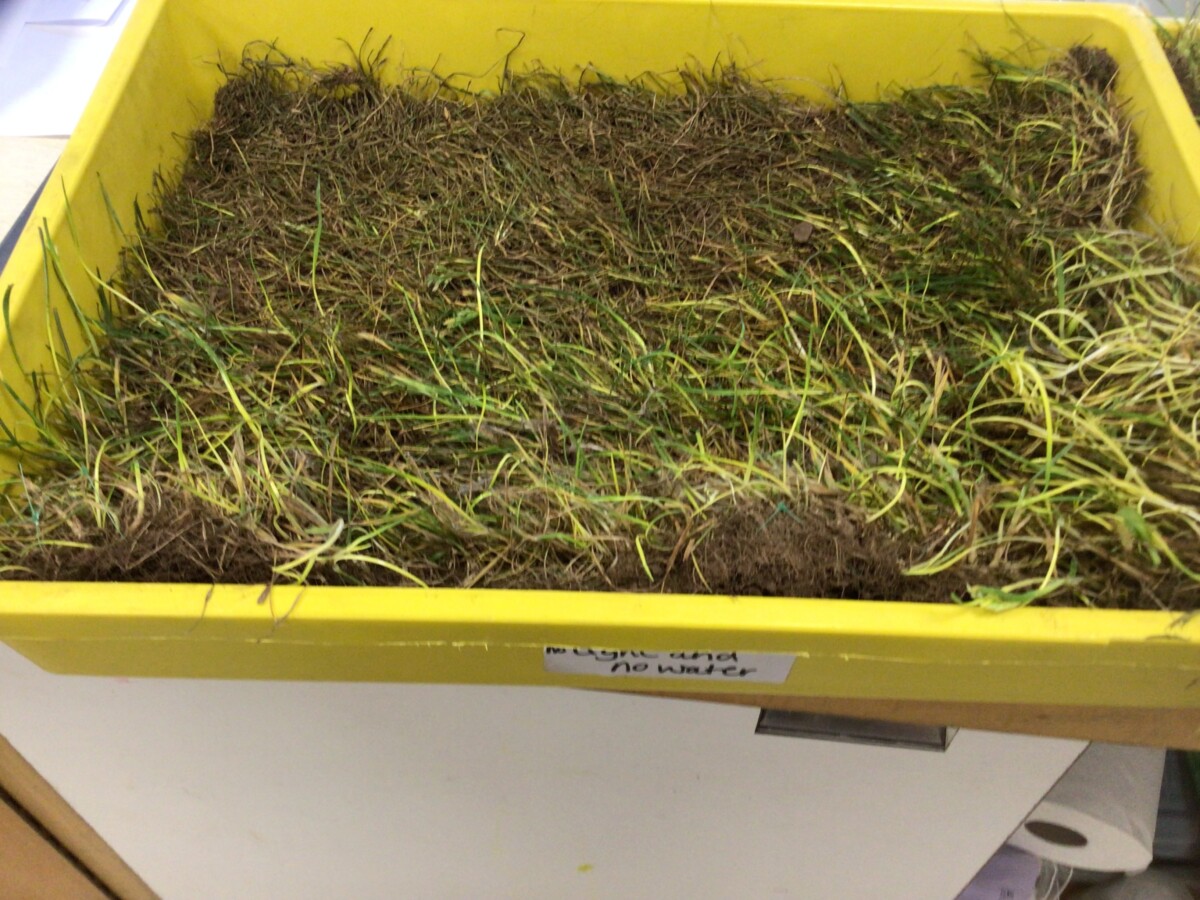
No light and no water

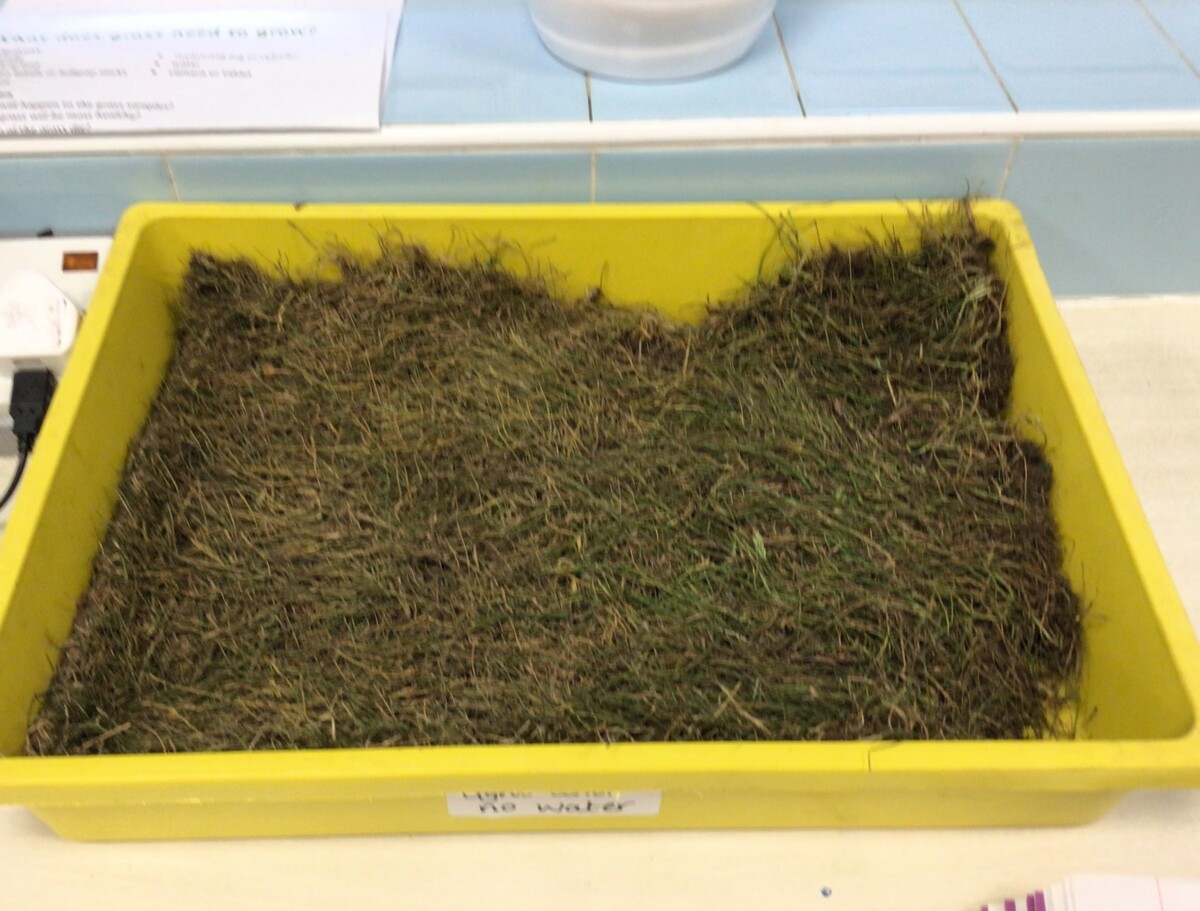
Light and no water

They said:

“Every day we are interested to have a look. Our predictions have been fairly accurate so far and we are amazed by the colour of the grass in the dark. It’s so yellow!”

Good luck with the next stages of your experiment!

Contact us

01392 231040
sales@wesellturf.com

Office address

HCT Turf
The Old Stable
Clyst Road
Topsham
EX3 0DB

Social media

Spring Lawn Revival

Spring Lawn Revival:

tips on getting your grass looking good after Winter

Spring is exactly the right time to revive your lawn ready for the warmer months ahead.

Spring Lawn Revival: 

tips on getting your grass looking good after Winter

A lawn rarely looks its best after months of cold, wet weather, and we have had quite a bit of wet this year! Your lawn may be patchy and waterlogged, with grass struggling to grow. But spring is exactly the right time to revive your lawn ready for the warmer months ahead.

A lawn rarely looks its best after months of cold, wet weather, and we have had quite a bit of wet this year! Your lawn may be patchy and waterlogged, with grass struggling to grow. But spring is exactly the right time to revive your lawn ready for the warmer months ahead.

You may need to repair minor damage, add seed to encourage a lusher lawn, or even returf areas that are beyond saving. So how do you get your grass back in top condition?

Assessing winter damage

Firstly, look closely at the condition of your grass. Some of the usual issues include:

  • Moss build-up: this can choke your grass and prevent healthy growth.
  • Waterlogging and compaction: heavy rain and frost can compact soil, making it difficult for grass to thrive, particularly in the South West where we have clay soil.
  • Bald patches and thinning areas: often happens after wet winters or where the lawn has been walked on a lot, which can damage the turf.
  • Weed invasion: weeds often do well in winter conditions and can take control where there is weak grass.

Once you’ve identified your problem areas, you can start your spring lawn revival.

Step 1: Feed your lawn

As temperatures start to creep up, your lawn needs nutrients to help it recover from winter stress. Apply a balanced spring lawn feed – look for one with nitrogen to encourage green growth, and phosphorus and potassium to help strengthen roots. Eco-conscious gardeners might prefer to consider organic options, such as seaweed-based feeds.

Step 2: Scarify and aerate your lawn

If your lawn has become overtaken by moss or dead grass, rake it over. This helps to remove this layer and allow fresh growth. Manual raking can be therapeutic, if you have a large area of grass, you may prefer to use a powered lawn scarifier.

It’s essential to aerate waterlogged or compacted soil. You can do this by spiking the ground with a garden fork or a solid or hollow-tine manual aerator. This will improve drainage and allow air, water, and nutrients to reach the roots.

Step 3: Reseed for a healthier looking lawn

Thin or patchy areas of lawn can be overseeded to encourage new grass growth. There are different types of seed mix to choose from, so decide if you need, for example, a shade-tolerant variety or hard-wearing blend for well-used lawns. Spring is an ideal time for overseeding, as temperatures are warming but the soil still retains moisture.

  • Rake and loosen the soil in the affected areas.
  • Scatter the grass seed evenly over the patches.
  • Lightly rake again to ensure good seed-to-soil contact.
  • Water gently and keep the area moist until new growth appears.


Step 4: When to consider returfing

If large sections of your lawn have excessive moss, show extreme wear or even signs of disease, you may decide to returf – this is basically laying fresh turf rather than reseeding, which will give you quicker results.

How to returf your lawn

  1. Use a spade or turf cutter to lift the old turf. If the soil is compacted, break it up with a fork.
  2. Make the soil level using a rake, carefully removing stones and debris. Adding a layer of quality topsoil improves conditions for new turf to establish (see: https://wesellturf.com/products/topsoil/)
  3. Starting at one edge, rolling out each turf roll tightly against the next. Stagger joints like brickwork for a natural look.
  4. Gently press the turf down and give it a deep watering to help it settle.
  5. Avoid walking on the new turf for a few weeks to give the roots time to establish.

If maintained well, the fresh turf will root quickly and blend seamlessly into your garden.

Step 5: Regular mowing and ongoing care

Once your lawn starts growing again, regular mowing will keep it neat and healthy. For the first few cuts of spring:

  • Set the mower blade higher than usual to avoid stressing the grass.
  • Only cut when the grass is dry to prevent damage.
  • Avoid removing more than a third of the grass height at a time.

By mid-spring, your lawn should be thriving. Continue to feed it every 6–8 weeks, water in dry spells, and tackle weeds and moss as needed.

Enjoy your revived lawn this spring!

With a little TLC, your lawn will bounce back beautifully after winter giving you a lush, healthy lawn ready for spring and summer enjoyment.

If you need turf or topsoil just get in contact. For smaller amounts of turf we will recommend a local supplier of our turf.

If you would like any further advice on spring lawn care or would like to talk to us about your order, please contact us on 01392 231040 or email sales@wesellturf.com

Contact us

01392 231040
sales@wesellturf.com

Office address

HCT Turf
The Old Stable
Clyst Road
Topsham
EX3 0DB

Social media
Turf ordering

Turf ordering

When you order your turf we need to know the dimensions of the area and your location so we can give you a quote. If this is the first time you’ve bought turf some of the following information could be helpful for you.

Turf ordering

When you order your turf we need to know the dimensions of the area and your location so we can give you a quote. If this is the first time you’ve bought turf some of the following information could be helpful for you.

We now cut turf in square metre rolls. But we can work out your turf requirements whether you have measured in metres or yards and feet without any difficulty.

If your patch is square or rectangular it is a simple matter of length x width. If some of the edges of your area are a bit wiggly or slightly slanted the best approach is to “square-off” the measurements you take. That way you will certainly cover the area with just a small amount of wastage where the edge falls inside the rectangle.

Tricky shapes can be hard to estimate and inevitably you could end up ordering too few or too many turf. We will do all we can to help you get it as near as possible but please be aware that we cannot take back any turf which you have surplus. If you find you have spare rolls you could see if a neighbour could use it. Or if you unroll the turf and keep it watered, even just left on concrete the grass will remain healthy and reusable for as long as 2 weeks.

If you use up all the rolls you ordered and find you need just a few more this may be less than our minimum order quantity. However for small quantities you can go to the garden centres we supply and collect some. Please contact us so we can tell you the nearest to you and when they will have a fresh supply. Or you can see their phone numbers on our “Garden Centres” page.

For awkward shapes there are some approaches that we suggest. Where it is quite a large area and very hard to calculate, for example due to lots of curved edges, for which there isn’t really a means of calculating, you could under-order and focus on laying the most wiggly parts first. This hopefully leaves you with the final part which is easier for you to measure.

We are also happy to have a look at your sketch or detailed plan to see if we can work it out for you. You can send this to us by fax or email, or call in to the office with it. There is no charge for any of this help with ordering but unfortunately we cannot visit your site to measure. The exception to this would be if you ask us to arrange a laying service for you.

Whatever your requirements we will always advise you what different options we can identify, what the cost and other implications are and try to help with your decision.

We supply quality turf all year round. If you would like any further advice on lawn care or would like to talk to us about your order, please contact us on 01392 231040 or email sales@wesellturf.com

Contact us

01392 231040
sales@wesellturf.com

Office address

HCT Turf
The Old Stable
Clyst Road
Topsham
EX3 0DB

Social media
Did you know that we supply quality screened topsoil?

Did you know that we supply quality screened topsoil?

Enough topsoil of suitable quality is essential for any successful garden or landscaping project. You may find that the quantity or quality of the soil at your site needs increasing or improving. We keep a stock of general purpose sandy loam topsoil which many of our customers buy as part of their turfing project.

Did you know that we supply quality screened topsoil?

Enough topsoil of suitable quality is essential for any successful garden or landscaping project. You may find that the quantity or quality of the soil at your site needs increasing or improving. We keep a stock of general purpose sandy loam topsoil which many of our customers buy as part of their turfing project.


Topsoil for laying turf on

We recommend laying turf on a 10-15cm layer of topsoil for it to grow successfully. If your plot doesn’t have enough then our screened topsoil is the ideal material to put down.   It can be mixed with your existing soil or just added on top. We can calculate how much soil you would need from your measurements and give you a quote – just call or email us to ask.

Topsoil for planting beds

You might want to add some compost or other specific nutrients if you plan to grow something particular when using it for beds. All our batches of soil have been tested so we can let you have that information: nutrient levels, pH, etc.

Delivery – loose topsoil

Our screened topsoil is delivered loose and tipped in quantities from 2 tons upwards. Our small tipper lorry carries up to 7 tons. Larger quantities can be delivered on 6- or 8-wheeler lorries which carry 16 and 20 tons respectively.


Bagged topsoil

We can supply bagged soil on request, that’s approximately 800kg. Give us a call if you’d like more information.


About our topsoil

We operate an Environmental Permit at our site just near to J30 of the M5 for handling locally sourced topsoil. Topsoil that is to be moved must have contaminant tests done on multiple samples. These tests enable us to establish if it is suitable for residential use before we accept it. But crucially we only handle material that is low clay-content, nutritious and easy to handle and our customers want to come back for all their projects.

We’ll then screen the soil at our site and test samples against BS 3882:2015. This standard gives information about nutrients, structure, pH, etc in a handy one-page format that we can send out on request.  You can also chat with us about the characteristics of the soil and get a free sample.

We supply quality turf all year round. If you would like any further advice on lawn care or would like to talk to us about your order, please contact us on 01392 231040 or email sales@wesellturf.com

Contact us

01392 231040
sales@wesellturf.com

Office address

HCT Turf
The Old Stable
Clyst Road
Topsham
EX3 0DB

Social media

Is spring the best time to lay turf?

Is spring the best time to lay turf?

Waving goodbye to winter brings renewed hope and energy to gardeners and a sense of purpose and positivity. Spring brings with it new buds, new growth and the impetus to be outside.

Is spring the best time to lay turf?

Waving goodbye to winter brings renewed hope and energy to gardeners and a sense of purpose and positivity. Spring brings with it new buds, new growth and the impetus to be outside.

One of the main focal points to notice after the long winter months will be the condition of your lawn (See our lawn care tips for spring time). Or for those gardeners considering new projects it might be time to lay turf.

Is spring the best time to lay turf?

Turf is one of the most under-estimated aspects of any garden, and with spring fast approaching, most think this is the best (and only time) to lay turf. Yet turf can be laid any time of year. We think autumn is the optimal time, but laying turf in spring is absolutely fine and can transform any sized project instantly.

With the promise of lazy summer days, entertaining on the lawn, and perhaps a spot of croquet, gardens will need to look their best. For some, spring is therefore seen as the most convenient time to lay down a new lawn.

What are the advantages of laying turf in spring?

Conditions in spring time are very favourable. As you are working with nature, days are generally milder and longer, rainfall is gentle, providing appropriate irrigation and moisture for root growth to establish at a faster rate.

The temperature of the soil is warmer in spring, giving plants the ability to put down roots for immediate growth. The soil will also be much easier to work with.

If soil quality is poor it’s important to use a pre-turfing fertiliser before turf is laid. Your local garden centre will be able to recommend a suitable product.

The disadvantages of laying turf in spring

Turf laid in the spring will need extra watering, especially during extreme dry spells during the summer. Dry soil may stress the turf and delay rooting. For large areas make sure you have arranged irrigation or consider whether you can delay your turf project until the autumn. Small areas are easier to manage with a sprinkler.

There may be a shortage of turf during the spring months at garden centres as supplies run dry due to popularity. But don’t let that deter you, we are on hand to advise where and when you can find stocks of our turf, and of course we are here to supply too.

Care guide when laying turf

Turf provides an instant lawn effect but it is important to prepare the soil well before laying, as you would grass seed. (See our guide to preparing your soil for turf).

Don’t be tempted to mow your grass before it is fully rooted as this stresses turf and may delay rooting.

We advise you to lay turf on the day of delivery during the spring. If this is not possible, we recommend you unroll the turf in a holding area and water it regularly.

Do not under-water your newly laid turf, as this may result in shallow rooting. The water applied needs to be sufficient to penetrate and soak the soil underneath the turf in order to encourage the news roots downwards. There is no need to feed it for the first 3-6 months as it arrives fully fertilised.

In order for your new turf to settle in stay off it, ideally for at least 3-4 weeks, to enable it to establish and really set down its roots, so it can become a thing of beauty throughout the summer months and beyond.

Summary

  • Conditions for laying turf in spring are favourable, warm and wet
  • When laying turf in spring plan how you will keep it watered including for that first summer
  • Do not mow or run around on the new turf for the first 3-4 weeks

We supply quality turf all year round. If you would like further advice on lawn care this spring or would like to talk to us about your order, please contact us on 01392 231040 or email sales@wesellturf.com

Contact us

01392 231040
sales@wesellturf.com

Office address

HCT Turf
The Old Stable
Clyst Road
Topsham
EX3 0DB

Social media